
The Ultimate Guide to Greenhouse & Grow Room Humidity Control: Prevent Mold, Boost Yield and Quality
Humidity is the silent variable that makes or breaks a grow. Too high and mold destroys your crop overnight. Too low and your plants stop growing. In commercial greenhouses and indoor grow rooms, precise humidity control is not optional — it is the single most important investment you can make after lighting and irrigation. This guide covers everything you need to know about indoor grow humidity levels, from the science behind plant transpiration to choosing the right grow room dehumidifier for your facility.
Why Humidity Control Is the Key to Growing Success
Relative humidity (RH) directly affects three critical plant processes: photosynthesis, transpiration, and disease susceptibility. When humidity is within the optimal range, plants efficiently absorb nutrients through transpiration, maintain turgor pressure for structural support, and keep stomata open for CO₂ uptake. When humidity drifts outside that range, every one of these processes is compromised.
Transpiration is the engine that drives nutrient uptake. Plants pull water from the roots and release it as vapor through stomata on the leaf surface. This process is governed by the vapor pressure deficit (VPD) — the difference between the moisture inside the leaf and the surrounding air. A moderate VPD drives healthy transpiration. Too low (high humidity), and transpiration stalls — nutrients stop moving, and plants become susceptible to calcium deficiencies like blossom end rot. Too high (low humidity), and transpiration accelerates beyond what the root system can supply — causing wilting, tip burn, and stunted growth.
Beyond plant physiology, humidity is the primary environmental factor driving fungal and bacterial disease. Most plant pathogens require sustained leaf wetness or RH above 85% to germinate and infect. A commercial greenhouse operating at 80–90% RH without active dehumidification is essentially an incubator for botrytis, powdery mildew, and pythium root rot.
Humidity Requirements by Growth Stage
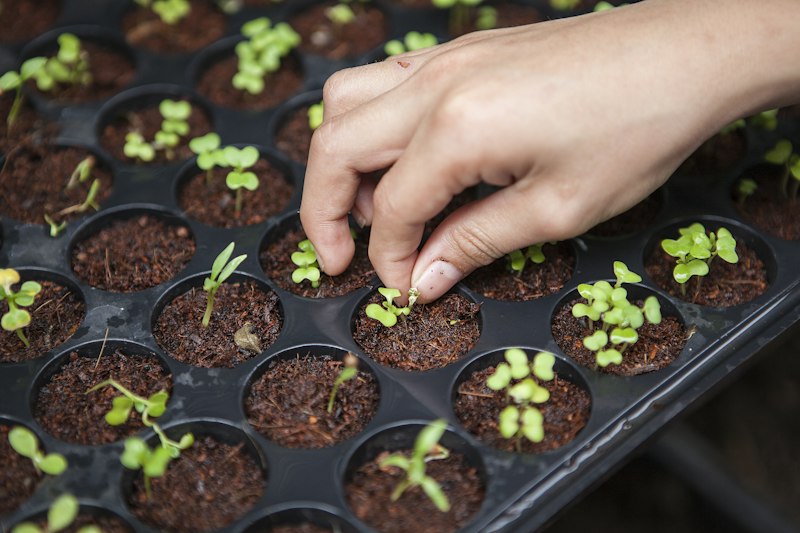
Different growth stages demand different humidity levels. Seedlings and clones need high humidity to prevent water loss before root systems develop. Vegetative plants thrive at moderate humidity. Flowering plants need lower humidity to prevent mold and encourage resin production. Here is a detailed breakdown:
| Growth Stage | Optimal RH | VPD (kPa) | Key Risk If Wrong |
|---|---|---|---|
| Seedling / Clone | 70–80% | 0.4–0.8 | Drying out, failed rooting |
| Early Vegetative | 60–70% | 0.8–1.0 | Slow growth, nutrient lockout |
| Late Vegetative | 55–65% | 0.8–1.2 | Stretching, weak stems |
| Early Flowering | 45–55% | 1.0–1.5 | Mold onset, poor resin |
| Late Flowering | 40–50% | 1.2–1.5 | Bud rot, powdery mildew |
| Fruiting (Tomato, Pepper) | 60–70% | 0.8–1.2 | Blossom end rot, cracking |
The transition between stages is as important as the setpoints themselves. Abrupt humidity changes stress plants and trigger defense responses that divert energy away from growth and yield. Program your climate controller for gradual transitions — aim for no more than 5% RH change per hour when shifting between growth stages.
The Fatal Consequences of High Humidity
Sustained high humidity is the number one cause of crop loss in controlled-environment agriculture. Here are the three most devastating threats:
Botrytis (Gray Mold / Bud Rot)
Botrytis cinerea spores are present in virtually every grow environment. They remain dormant until RH exceeds 85% for more than 4–6 consecutive hours with temperatures between 18–24°C. Once activated, botrytis can destroy an entire flowering crop in 48–72 hours. The mold typically attacks dense flower clusters from the inside out — by the time you see it on the surface, the interior is already colonized. Prevention requires maintaining RH below 55% during flowering and ensuring adequate air circulation through the plant canopy. A properly sized grow room dehumidifier is the most effective tool for preventing botrytis outbreaks.
Powdery Mildew
Unlike botrytis, powdery mildew does not require leaf wetness — it thrives at 50–70% RH with poor air circulation. It appears as white powdery spots on leaf surfaces and spreads rapidly in stagnant, humid environments. Once established, powdery mildew reduces photosynthesis by covering leaf surfaces and can render flowering crops unmarketable. The most effective prevention is maintaining airflow above 0.5 m/s across the canopy and keeping humidity within the target range for each growth stage.
Pythium Root Rot
Pythium species are water-borne pathogens that thrive in saturated growing media. When humidity is too high, plants transpire less, which means they take up less water from the root zone. The result is chronically wet growing media — the perfect environment for pythium. Infected roots turn brown and mushy, losing their ability to absorb water and nutrients. In hydroponic systems, pythium can spread through the entire nutrient reservoir in days. Root rot is particularly insidious because the symptoms above ground (wilting, yellowing) mimic nutrient deficiency, delaying correct diagnosis until the root system is severely damaged.
The Negative Effects of Low Humidity
While high humidity gets most of the attention, low humidity is equally damaging. When RH drops below 40%, several problems emerge:
- Rapid transpiration exceeds water uptake. Plants lose water through stomata faster than roots can absorb it. This causes cellular dehydration, leaf curling, and tip burn — especially in fast-growing crops like lettuce and herbs.
- Stomatal closure. When water loss exceeds uptake, plants close their stomata as a survival mechanism. Closed stomata stop CO₂ intake, which halts photosynthesis. Growth stagnates, and yield potential is permanently lost for the affected period.
- Nutrient concentration spikes. In hydroponic systems, low humidity drives faster water uptake from the reservoir, concentrating the nutrient solution. This can push EC above safe levels and cause nutrient toxicity — particularly nitrogen and potassium.
- Increased pest vulnerability. Spider mites thrive in low-humidity environments. They reproduce faster and cause more damage when RH is below 45%. Many beneficial insects (predatory mites, lacewings) also perform poorly in dry conditions, reducing the effectiveness of biological pest control.
For greenhouse operations in arid climates or facilities running high-intensity lighting that heats the air, low humidity can be a persistent problem. Supplemental humidification — typically ultrasonic systems — may be required to maintain minimum RH thresholds during peak lighting periods.
Humidity Control Methods Compared
There are three primary approaches to managing humidity in greenhouses and grow rooms. Each has a role, but they are not equally effective as standalone solutions:
| Method | How It Works | Strengths | Limitations |
|---|---|---|---|
| Ventilation | Exchanges moist indoor air with drier outdoor air | Low energy cost; also refreshes CO₂ | Depends on outdoor conditions; loses heat/CO₂; ineffective in humid climates |
| Humidification | Adds moisture via ultrasonic or evaporative systems | Essential for propagation and arid climates | Only raises RH; cannot reduce humidity; risk of over-saturation |
| Dehumidification | Actively removes moisture from air via condensation or desiccant | Works in any climate; precise RH control; preserves heat and CO₂ | Higher energy cost; requires equipment investment |
For commercial operations, dehumidification is the only method that provides reliable, climate-independent humidity control. Ventilation is a useful supplement when outdoor conditions are favorable, but it cannot be relied upon during the critical night period when outdoor dew points are high or during summer months when outside air may be even more humid than the grow room. A properly specified dehumidifier maintains your target RH regardless of weather, season, or time of day.
Additionally, dehumidifiers recapture latent heat from the moisture they condense. In a closed greenhouse during winter, this "free" heat can offset 30–50% of heating costs — a significant energy advantage over ventilation-based humidity control that exhausts heated air.

How to Choose the Right Grow Room Dehumidifier
Selecting the correct dehumidifier is a calculation, not a guess. You need to match the unit's moisture removal capacity to your facility's total moisture load. Here is the step-by-step process:
Step 1: Calculate Your Moisture Load
The total moisture you need to remove per day comes from three sources:
Total Moisture Load (L/day) = Plant Transpiration + Irrigation Evaporation + Infiltration
Plant transpiration: ~3 L/day per kW of grow lighting (rule of thumb)
Irrigation evaporation: ~10–20% of daily irrigation volume
Infiltration: depends on ventilation rate and outdoor dew point
For example, a 200 m² grow room with 15 kW of LED lighting, 200 L/day irrigation, and minimal infiltration generates approximately:
- Transpiration: 15 kW × 3 L/day = 45 L/day
- Irrigation evaporation: 200 L × 15% = 30 L/day
- Infiltration: ~10 L/day (for semi-sealed room)
- Total: ~85 L/day
Step 2: Apply a Safety Factor
Always oversize by 20–30% to handle peak moisture events (post-irrigation, summer humidity spikes) and equipment degradation over time. For our 85 L/day example: 85 × 1.25 = 106 L/day rated capacity minimum.
Step 3: Match Capacity to Equipment
GrowClimate offers a range of compressor-based dehumidifiers designed specifically for grow room and greenhouse environments:
- GRO-165L — 165 L/day, ideal for small grow rooms (50–100 m²)
- GRO-288L — 288 L/day, for medium commercial rooms (100–200 m²)
- GRO-385L — 385 L/day, for large greenhouses (200–400 m²)
- GRO-720L / GRO-960L — 720–960 L/day, for industrial-scale facilities
- GD-240L / GD-480L — Ceiling-mounted units for grow rooms where floor space is limited
All models feature RS485/Modbus connectivity for integration with climate controllers and building management systems, allowing automated RH setpoint control and remote monitoring.
For facilities requiring humidity below 35% RH — such as seed storage, drying rooms, or cold storage — explore GrowClimate's desiccant dehumidifier series which operate effectively at temperatures as low as -10°C.
Step 4: Consider Placement and Airflow
Even the best dehumidifier underperforms if placed incorrectly. Follow these principles:
- Position the dehumidifier where it can draw the most humid air — typically near the plant canopy or at the low point of the room where moist air settles
- Ensure the dry air output circulates back through the grow space rather than short-circuiting directly back to the intake
- For rooms over 150 m², consider two smaller units at opposite ends rather than one large unit — this improves humidity uniformity and provides redundancy
- Ceiling-mounted units like the GD series are ideal for rooms with limited floor space or where equipment on the floor would obstruct airflow
Frequently Asked Questions
What is the ideal humidity for a grow room?
It depends on the growth stage. Seedlings and clones need 70–80% RH, vegetative plants thrive at 55–70% RH, and flowering plants require 40–55% RH to prevent mold. The key is to adjust humidity downward as plants mature, especially during the flowering stage when dense buds are most vulnerable to botrytis.
How do I control humidity in my grow room?
The three main methods are ventilation, humidification, and dehumidification. For reliable control in any climate, a dedicated grow room dehumidifier is essential. Ventilation can supplement dehumidification when outdoor air is drier than indoor air, but it should not be your primary method — it wastes conditioned air and is unreliable during humid weather. Read more about the science of VPD-based climate control.
What humidity level prevents mold in a greenhouse?
Most plant pathogens require sustained RH above 85% to germinate. Maintaining greenhouse humidity below 75% during the day and below 80% at night dramatically reduces disease pressure. During flowering, target RH below 55% for maximum mold prevention. Active dehumidification is the most reliable way to maintain these levels, especially during the night cycle when temperatures drop and RH naturally spikes.
What humidity should I target for the flowering stage?
For most flowering crops, target 45–55% RH during early flowering and 40–50% RH during late flowering. Lower humidity during flowering encourages resin and essential oil production while preventing bud rot and powdery mildew. The transition from vegetative to flowering humidity should be gradual — reduce RH by no more than 5% per day over 3–5 days.
Do dehumidifiers add heat to the grow room?
Yes. Compressor dehumidifiers release the latent heat from condensed water vapor back into the room, plus the heat from the compressor motor itself. A unit rated at 2 kW input power adds approximately 2 kW of heat to the space. In winter, this is beneficial — it reduces heating costs. In summer, you may need additional cooling capacity to compensate. Factor this into your thermal load calculations when designing your climate control system.
Can one dehumidifier handle both my veg and flower rooms?
Not effectively. Veg rooms typically require 60–70% RH while flower rooms need 40–50% RH — a difference of 20% or more. A shared dehumidifier cannot maintain two different setpoints simultaneously. The most effective approach is separate dehumidifiers for each room, each with its own hygrostat controller. If budget is a constraint, use ducted connections with motorized dampers controlled by a central system that prioritizes the room furthest from its setpoint.
Key Takeaways
- Humidity control is non-negotiable for commercial growing — it affects photosynthesis, nutrient uptake, disease pressure, and final yield quality
- Match RH to growth stage: 70–80% for seedlings, 55–70% for vegetative, 40–55% for flowering
- High humidity kills crops through botrytis, powdery mildew, and pythium root rot — all preventable with proper dehumidification
- Low humidity stunts growth by forcing stomatal closure and halting photosynthesis
- Dehumidifiers are the only reliable method for climate-independent humidity control in greenhouses and grow rooms
- Size your dehumidifier correctly: calculate total moisture load, add 20–30% safety margin, and select the appropriate capacity unit
Whether you are running a 50 m² indoor grow or a 5,000 m² commercial greenhouse, the principles are the same: measure your moisture load, specify the right equipment, and maintain stage-appropriate humidity setpoints with automated control. For help sizing and specifying dehumidification equipment for your facility, contact GrowClimate's application engineering team — we provide free climate load calculations and equipment recommendations tailored to your specific growing environment.
Need Help with Climate Control?
Get a free consultation from our application engineering team for your specific growing environment.
Contact an Engineer